Sunday, February 7, 2010

When in Rome...get married


When in Rome

Kristen Bell, Josh Duhamel
Mark Steven Johnson

Happy Superbowl Sunday, everyone. I’ll try to put my distaste in the ad scandals of this year’s football game aside for now and get on to the main subject of this blog: gender in movies.
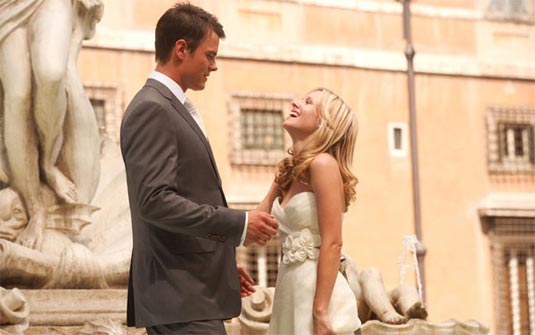
This last weekend I saw When In Rome, which is about a business-minded woman (Bell) who goes to the wedding of her younger sister in Rome. She has the stereotypical “business woman syndrome” portrayed in movies: attractive, tough yet struggling at work, at a loss for finding men, doesn’t care to ever find a man. Never fear though, my faithful friends, because in a drunken stupor she pulls coins out of the Fountain of Love in Rome. And as everyone (apparently) knows, when you do so the people who owned said coins will fall madly in love with you. The movie chugs along with her attempting to avoid the infatuated crazies and decipher if one crazy (Duhamel) is simply under the spell of the Fountain or if he truly loves her.
And as predictable as an ice storm in Oklahoman winter, the business woman falls in love and sheds her work obsession for a hot man with nice abs.
There’s not a lot else I have to say about this one. It is pretty self explanatory. The Napoleon Dynamite jokes are great, though, for those of my generation.
I give this three vagenises.
The Goods: slightly funny, Napoleon Dynamite jokes.
The Bads: ridiculous “why should a woman be working so hard there must be something wrong with her” attitude.

Thursday, January 21, 2010

New Moon

Whaaat? What’s this? I’m back? Yes, after my extremely lazy winter trek into doing nothing, I return anew. I would start with my latest movie tirade (The Book of Eli) but I think it is highly appropriate to bring something to the table that is much expected of me. Are you ready? Y’sure?


The Twilight Saga: New Moon

Kristen Stewart, Robert Pattison, Taylor Lautner
Chris Weitz

Before I begin, a statement: I do not hate this series, but I certainly do not like it.
I only read the first book before getting bored, so I hardly know anything about the movies to come, but I have seen the first two, and I think there is one main fact to be said about them. They are not good for young girls. What is the story about? A teenage girl who falls hopelessly infatuated with a boy in her new town, who turns out to be a dangerous vampire. In the second movie, however, her infatuation reaches a whole new level of dangerous. She is so desperate and depressed she pushes herself to the edge of life just to see her “love” in her mind, protecting her. She completely disregards her own safety because she is too wound up in a boy she’s known for less than a year.
I think the perfect example of the mindset of this girl is her car. The girl, Belle, drives her old red pickup truck to school every day and is often associated with this car. But what about, say, if she is in the car with Edward Cullen, or her new “friend,” Jacob? Why, they drive of course. Now, I do not know about any of my scarce readers, but when I am in my car, unless it is a parents, I am driving it. Why? Because it’s my fucking car. But, regardless that it’s her car, that they are driving to her house, it is obvious that her car must be driven by the man there and that she must sit in the passenger seat, twiddling her thumbs and swooning. Her car represents everything destructive about her whole life: the fact that, unless she is completely and utterly alone, she is incapable of ruling it herself.
But, like I said before, I do not hate this series. I think that, every now and then, people need to sit back and feel taken away by a romantic story with twists and heartache; just look at Romeo and Juliet. But is it necessary to push the already pressured, overdramatic young girls with an idea that they should be so utterly obsessed with a boy that they consider suicide? That they let him rule their life? That they’d give up everything, everything, just so that they can kiss him and make little babies together?
Hell no.
I give this one vagenis.
The Goods: romantic & occasionally blissful (plus, amazing soundtrack).
The Bads: everything else.
And on that note, I bid thee adieu. I promise to continue writing these this semester.

Tuesday, November 24, 2009

A Christmas Carol (Christmas Movies)


A Christmas Carol


Jim Carrey
Robert Zemeckis


Aaah, Christmas. One of the most imaginative, fanciful times of the year for everyone; I, not being Christian, have nevertheless adored and vehemently celebrated this holiday my whole life. I love the idea of the tree and the misletoe and the colors and all the wonderful aspects which combine to make a magical time of the year. I was, however, less than excited to see A Christmas Carol. Nothing against Dickens, or Jim Carrey, but I simply wasn’t ready for Christmas to be here quite yet; but I succumbed and went to see it. Now, I saw it on the IMAX screen (massively larger than a normal one) and also in 3D, so I was simply blown back in my seats. There were moments when I was truly scared (which is saying something about a story I’ve heard a thousand times) and wanted to hide in my seat, and there were moments when I was full of, cliché enough, the Christmas spirit. It was definitely imaginative and a great refreshing retelling of this story-and I would suggest everyone wanting the Christmas mood to see it.
Now…I’m sure my trickle of readers is wondering why, of all things, I’m doing a gender-based review of a classic English story. Why? Because I’d like to bring up something that isn’t mentioned all that often: the fact that, when retelling or reinventing old classic tales, we continue to enforce the stereotypes they themselves enforced. There are a scant few females in A Christmas Carol, and only one with an admirable representation, and I’m sure the argument for keeping this could be that, simply put, it was the way it was written. And I certainly do not claim to tarnish this old story. But do we have to continue showing those stereotypes? If this movie is supposed to be as close to the book as possible, it certainly did its job, but why not create some more modern Christmas tales-ones not about a man overcoming his life but a woman dealing with her problems (which, hopefully, aren’t focused on the man in her life). Movies like this and many others (such as Santa Clause with Tim Allen) push the stereotypes of the man coming into the charitable Christmas way with little thought to the women in his life.
Simply put: Why not have some Christmas movies focused on women, where the point isn’t just their relationships?

Monday, October 26, 2009

Cirque du Freak: The Vampire's Assistant


Cirque du Freak: The Vampire’s Assistant

Chris Massoglia, John C. Reilly, Josh Hutcherson, Jessica Carlson
Paul Weitz

Before I begin this review, I feel obligated to state that I am completely, wholly, 100% biased towards this movie. How can I dare write in hate towards a movie remaking the beloved book? The book that I bought for only $5, that was worn and musty, that I curled up in bed and read and giggled at the ridiculousness of. So before anyone says that this review looks too fondly upon that silly movie, keep in mind that it was one of my first endeavors into the horror genre I now love.
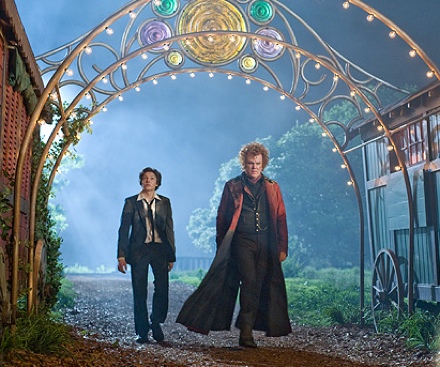
The movie follows a boy, Darren, who has a yin-and-yang relationship with his best friend, Steve. Darren is a nice straight-forward cliché popular boy, whereas Steve likes to walk on the dark side. During an argument, a mysterious car drives by and out floats and invitation to the Cirque du Freak. Thus begins a dark delicious story about a half-vampire boy and his friends in the Cirque (and beyond).
I loved this movie. I thought it was fun and lighthearted and stuck to the odd storyline of the book. The characters are vibrant and animated and the action scenes are exciting. It runs a little long, taking its time to get to the point, but its definitely worth watching.
Now, however, I must express something that I hope will inadvertently reach the ears of all the Hollywood vampire-obsessed moviemakers: what about us ladies? Must we always be the older sexy vampire vixen that pops up in a couple scenes, or the innocent non-vampire who offers her neck to her lover? When do we get our movie, our awkward difficult transformations into blood-sucking alluring beasts? I’d like to see that. And I’m hoping, now with the vampire movie becoming increasingly popular (look forward to my New Moon rant in the upcoming month) that the content will vary so that we can actually be the one thrashing on the ground in pain before becoming a true horrific freak.
I give this three vagenises.
The Goods: sticks to the book.
The Bads: stereotypical female roles and no female vampires whatsoever.


Monday, October 19, 2009

Paranormal Activity


Paranormal Activity

Katie Featherston, Micah Sloat
Oren Peli

Many people have heard of all the hype surrounding this newest release. Along the lines of Blairwitch Project, it was supposed to create confusion as to whether or not the story and video footage is real; that wasn’t as much of a wonder, however, as to the claims that it was a truly, truly horrifying film. And because of this, I’m sure my obscurely small amount of readers might wonder why I’m reviewing it on a gender-based blog. So let me get the gist of this story out of the way.
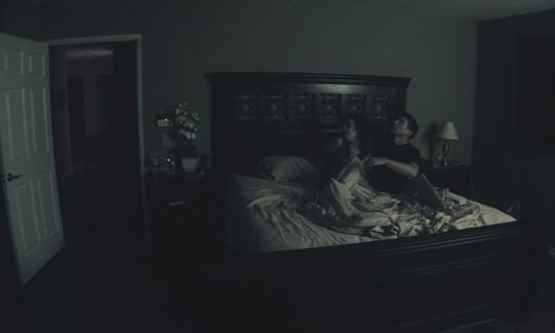
A couple (named Katie and Micah, the same names as the actors) are being terrorized by some “paranormal activity.” Because of this, the boyfriend, Micah, comes up with the idea to buy a video camera and set it up in their house. During the day, he carries it around recording their usual home going-ons, and at night, he props it up in their bedroom to record what happens when they sleep; that way, he reasons, they will be able to see and identify their haunter. The first half-hour of the movie is relatively calm, only having a couple spooky movements or misplaced items; but the second half, I guarantee, horrified me. I tried to leave the theatre quickly because I felt like the “enemy” of the movie knew I had watched it, and was going to kill me.
Well, that’s as much of it as I can safely say without spoiling this movie for other watchers. I try to view this as fairly as I can, but keep in mind that I’m a horror film junkee, and that I adore being scared. So this movie was perfect for me.
Now on to the important part. The enemy of this movie, which haunts and terrorizes the couple, is focused entirely upon the woman. It has some hints of sexual desire for the woman, constantly attempting to “get” her late at night when she’s sleeping. It even smashes a picture of her boyfriend’s face, showing obvious contempt for his “claims” of her. As many horror films (and films in general), the boyfriend refuses to find help in the ways the woman wants because she’s “his” girlfriend and he feels like its his responsibility as the “man” to help her. Any outside forces that try to help, he hates. Despite the horror of this movie, it was uncomfortable the amount of “this is MY woman,” “no, this is MY woman!” and leads to the ultimate sad ending of the movie.
Despite all that, it’s needless to say I slept with my lights on last night.
I give this
five vagenises.
The Goods: extremely scary and inventive.
The Bads: the woman has no power and is tossed between two angry outside forces.

Thursday, October 8, 2009

Surrogates


Surrogates

Bruce Willis, Radha Mitchell, Rosamund Pike, Boris Kodjoe, James Francis Ginty
Jonathon Mostow

The premise of this movie is that the human race develops “surrogates” (or alternate, controllable bodies). The idea of surrogates begins by simply creating bodies for disabled people, so they can live normal lives with the ability to feel; however, the organization’s popularity leads it to turn into a money-making scheme. They create surrogates to reflect every person’s “perfect” body and face. With this technology, people can simply curl up in a chair at home and live through an alternate beautiful body, giving them the advantage of not being harmed. No matter what happens to the surrogate, the human can just pop up out of the chair and go buy a new one.
Now I come to the issues. In this director’s opinion, when people are given the choice to have their perfect bodies, they’re a size 0. They have big boobs, perfect straight hair, and big beautiful eyes. Men, also, like abs and chiseled faces. Is this really what everyone wants? I don’t know about anyone else, but my perfect body is probably a size 10, maybe 9. That’s what I consider right for me. As the term goes, I don’t want to be a “fat girl stuck in a skinny body.” I don’t understand how this is completely unfathomable to those who designed this movie. There was one obese, nerdy scientist who refuses to use a surrogate--and he’s the only one I saw. I do realize, of course, the positive implications of the device; there are many transgendered or intersexual people who would probably prefer to mold their bodies. But that doesn’t give directors the right to assume everyone wants this size 0 body that fits the common gender roles. (As a side note, I didn’t see any gay or lesbian people in the movie--and the one person who seemed to be living his life as another gender was portrayed as a creepy overweight man getting his kicks pretending to be an attractive woman.)
I give this
two vagenises.
The Goods: creative and entertaining.
The Bads: ridiculous ideas of what people consider perfect and narrow sexual views.

Saturday, October 3, 2009

The Invention of Lying


The Invention of Lying

Ricky Gervais, Jennifer Garner, Jonah Hill
Ricky Gervais, Matthew Robinson

Now, I have to point out, there’s not a lot gender-wise to say about this movie. It’s a fantastic movie. I really enjoyed the dry humour and the clever way they showed a world where no one lies. It’s incredibly creative, changing the names of such simple things as a nursing home (“a sad place for hopeless old people,” I believe was the name) to make us realize how truly honest we could be, but refuse not to. Also, it has amazingly insightful commentary on how religion shapes a society, in negative and positive ways.
Jennifer Garner’s character, however, slips into her normal acting roles as the ridiculously happy, beautiful woman. She’s a bit daft, convincing herself she shouldn’t love Ricky Gervais’s character because he isn’t a perfect genetic match. And she tells him so. Her character lacks much depth, and as she’s pretty much the only female main character, that’s saddening. What’s also saddening is that, in the last scene, she’s in a pretty dress and a pretty apron masking a huge pregnant belly, making dinner for her family. The fifties, much? Despite that, this movie’s great--but I wouldn’t see it waiting to see the great gender commentary.
I give this
four vagenises.
The Goods: many good points on religion and lying.
The Bads: lack of character development in the females and a great fifties attitude at the end.